








Introduction
Flying with dogs as checked baggage or cargo requires careful planning, suitable crates, and an understanding of airline safety rules. Pet owners must also consider temperature embargoes, which can affect travel during extremely hot or cold weather. These restrictions help protect animals during airport handling, loading, transit, and unloading.
Understanding the difference between checked baggage and air cargo makes the process easier. It also helps owners choose suitable flights and prepare their dogs for a safer journey. Although airline policies vary, proper documentation and an approved travel crate remain essential.
Understanding Flying with Dogs as Checked Baggage or Cargo
Airlines generally transport dogs through different arrangements, depending on their size, destination, aircraft, and operating policies. Some accept eligible pets as checked baggage, while others require transportation through a dedicated cargo service.
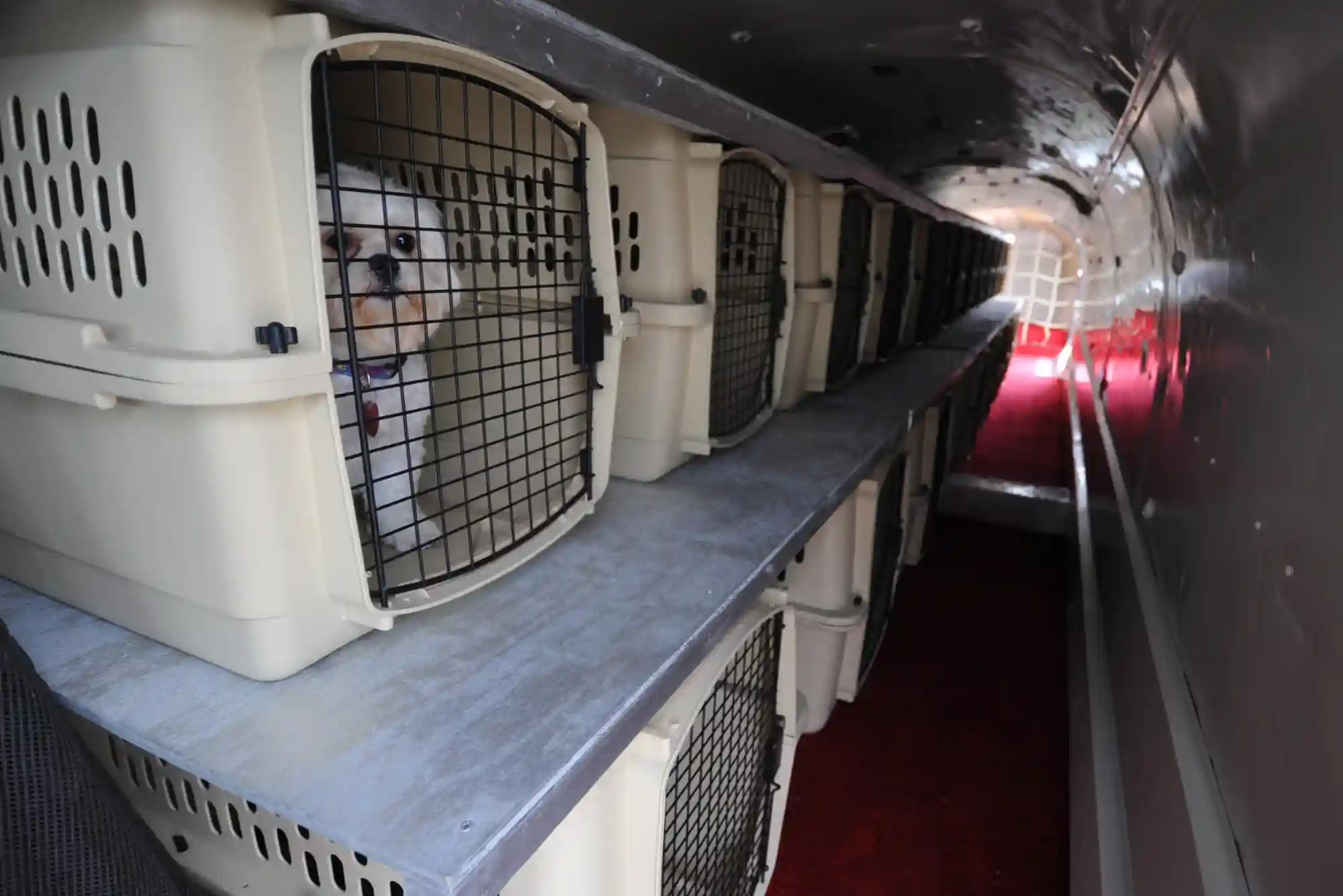
When a dog travels as checked baggage, it usually travels in a designated aircraft compartment. The pet is checked in through the airline’s passenger service and follows its specific animal transportation procedures.
Air cargo transportation works differently. The dog travels under an air waybill through an airline cargo department or an authorized pet shipping agent. This arrangement may be necessary for large dogs, certain international routes, or destinations with strict import requirements.
Before booking, confirm which service your airline offers. Never assume that every aircraft accepts pets as checked baggage. Some airlines transport animals exclusively through cargo facilities.

How Temperature Embargoes Affect Dog Air Travel
Temperature embargoes are restrictions that airlines introduce when weather conditions could threaten animal safety. They may apply when temperatures become excessively hot or cold at departure, arrival, or connecting airports.
Heat presents a serious concern because dogs cannot regulate their body temperature as efficiently as humans. Brachycephalic breeds, including Bulldogs and Pugs, may face additional breathing difficulties during stressful travel.
Cold weather also creates risks, particularly when animals wait on airport ramps or experience delays during ground handling. Young, elderly, sick, or short-coated dogs may be especially vulnerable.
Why Airlines Introduce Temperature Restrictions
Airlines consider several factors when deciding whether to accept an animal for transportation. These include outdoor temperatures, ground-handling conditions, aircraft equipment, and the availability of climate-controlled facilities.
A flight might operate normally while animal transportation remains restricted. Consequently, a passenger’s confirmed ticket does not guarantee that their dog can travel.
Restrictions may apply only to particular airports, aircraft, routes, or departure periods. Some airlines also impose seasonal embargoes during summer or winter.
Always check the latest policy directly with the operating airline. Ask whether temperature restrictions apply to every airport along the itinerary.
What Happens When Temperatures Exceed Airline Limits?
If conditions exceed the airline’s permitted limits, the carrier may refuse acceptance or postpone the animal’s transportation. Depending on the circumstances, owners might need to reschedule, choose another route, or use a different approved transport arrangement.
These decisions can happen shortly before departure because weather conditions change quickly. Therefore, flexible travel plans are particularly valuable when transporting dogs during extreme seasons.
Avoid booking tight connections that leave little time for unexpected changes. A direct flight can reduce handling and transit complexity when an appropriate service is available.
Airline Crate Specifications for Flying with Dogs
A suitable travel crate is one of the most important requirements for transporting a dog by air. Airlines assess crate construction, ventilation, security, dimensions, and the animal’s ability to move comfortably.
Many airlines follow applicable International Air Transport Association (IATA) Live Animals Regulations or similar standards. However, individual carriers establish their own acceptance procedures. An advertised airline-compliant crate does not automatically guarantee approval.
Choosing the Correct Crate Size
Your dog must have enough space to stand naturally, turn around, sit, and lie down comfortably. The crate should not restrict normal movement or force the animal into an awkward position.
Measure your dog carefully before purchasing a kennel. Include the nose-to-tail-base length, floor-to-head height, and the height needed for natural standing posture. Follow the airline’s measurement guidance because its sizing formula may differ.
A crate that looks spacious in a shop may still be unsuitable for your dog’s actual measurements. Ask the airline or an experienced pet shipper to verify the dimensions before departure.
Crate Construction and Ventilation
Air travel usually requires a sturdy, secure kennel designed for animal transportation. Depending on the airline, acceptable construction may include rigid plastic, fiberglass, or other approved materials.
The crate must provide sufficient ventilation and prevent the dog from escaping. Doors, hinges, locking mechanisms, and fasteners must remain secure throughout handling.
Metal ventilation openings and appropriate door designs may be required. Some airlines also specify restrictions on particular materials or kennel configurations.
Check the carrier’s exact requirements before making a purchase. Do not modify the crate in ways that compromise its structural integrity or ventilation.
Food and Water Containers
Many airline-approved kennels require accessible food and water containers. These should be securely attached and arranged so staff can provide water when necessary without opening the crate.
Long journeys may require additional arrangements for feeding and hydration. Confirm the airline’s requirements for container placement, filling procedures, and access during transit.
Absorbent bedding can help keep the crate comfortable. Avoid materials that create choking risks or obstruct ventilation.
Preparing Your Dog for Air Cargo Transportation
Preparation begins well before departure. Dogs that are unfamiliar with their crates may experience unnecessary anxiety during transportation.
Introduce the kennel gradually at home. Encourage your dog to enter voluntarily and spend short periods resting inside. Positive reinforcement can help build familiarity without creating negative associations.
Gradually increase the time spent inside the crate while maintaining a calm environment. Never rely on a single training session immediately before travel.
Exercise your dog appropriately before check-in, following veterinary advice. Provide water according to the airline’s instructions and avoid feeding a large meal immediately before departure unless your veterinarian recommends otherwise.
Sedation requires particular caution. Sedatives can affect breathing, balance, and the body’s response to changing conditions. Never administer medication for air travel without consulting your veterinarian and confirming the airline’s policy.
Documents Required for Dogs Traveling by Air
Documentation depends on the departure country, destination, transit points, and airline. International journeys may require a microchip, vaccination records, health certificates, import permits, or other official approvals.
Rabies vaccination requirements vary by destination. Some countries require specific waiting periods, blood tests, parasite treatments, or government-endorsed certificates.
Airlines may also request booking confirmation, animal identification details, and cargo documentation. For cargo shipments, an air waybill and additional handling paperwork may be necessary.
Begin researching requirements several weeks or months before departure. Some destinations have lengthy approval processes that cannot be completed at the last minute.
Confirm every requirement with the destination country’s official veterinary authority and the airline. An airline’s acceptance of your dog does not automatically mean immigration authorities will permit entry.
Choosing Between Checked Baggage and Air Cargo
The right option depends on your dog’s size, destination, airline, and travel circumstances. Checked baggage may be convenient when the airline accepts pets on your passenger itinerary.
Cargo transportation can offer access to routes or services unavailable through passenger baggage arrangements. It may also be necessary when the dog travels separately from its owner.
However, cargo arrangements can involve additional documentation, terminal visits, handling charges, and collection procedures. Owners should understand these requirements before confirming a shipment.
Compare the complete journey rather than considering price alone. Review the number of transfers, expected transit time, weather conditions, animal acceptance rules, and the availability of suitable handling facilities.
When possible, select a direct flight with fewer ground-handling stages. Confirm who will receive your dog at the destination and how collection will work.
Common Mistakes to Avoid When Flying with Dogs
One common mistake is purchasing a crate before checking the airline’s specifications. This can lead to unexpected expenses or rejection during check-in.
Another mistake is assuming that temperature restrictions apply only to departure airports. Arrival locations and connecting airports may also affect acceptance.
Owners sometimes underestimate documentation deadlines. Missing a required certificate or import permit can prevent boarding or create problems at the destination.
Avoid choosing flights solely because they are inexpensive. A longer itinerary with several transfers may introduce additional handling and logistical challenges.
Finally, do not assume that a healthy dog is automatically fit for air travel. A veterinary examination can help identify respiratory, cardiac, mobility, or other concerns that may affect the journey.
Frequently Asked Questions
Can dogs fly as checked baggage or cargo?
Yes, depending on the airline, route, dog size, and destination requirements. Some carriers accept eligible dogs as checked baggage, while others require air cargo transportation.
What is a temperature embargo for pets?
A temperature embargo restricts animal transportation when weather conditions may compromise safety. Airlines may refuse or postpone pet shipments during extreme heat or cold.
What size crate does a dog need for air travel?
The crate must allow the dog to stand naturally, turn around, sit, and lie down comfortably. Exact dimensions and construction requirements depend on the airline and applicable animal transport standards.
Are IATA-approved crates required for every airline?
Requirements vary by carrier and route. Many airlines use IATA Live Animals Regulations as a reference, but owners must confirm the operating airline’s specific acceptance rules.
Can a dog be denied boarding because of hot weather?
Yes. An airline may refuse animal transportation when temperatures exceed its permitted limits or suitable handling conditions are unavailable. Restrictions can affect departure, arrival, or connecting airports.
How early should I prepare my dog for cargo travel?
Begin crate training several weeks before departure whenever possible. Start documentation and veterinary preparations earlier for international journeys, especially when permits or waiting periods apply.
Conclusion
Flying with dogs as checked baggage or cargo requires more than booking a flight. Owners must understand temperature embargoes, select an appropriate travel crate, prepare documentation, and follow the airline’s animal transportation rules.

