





Introduction
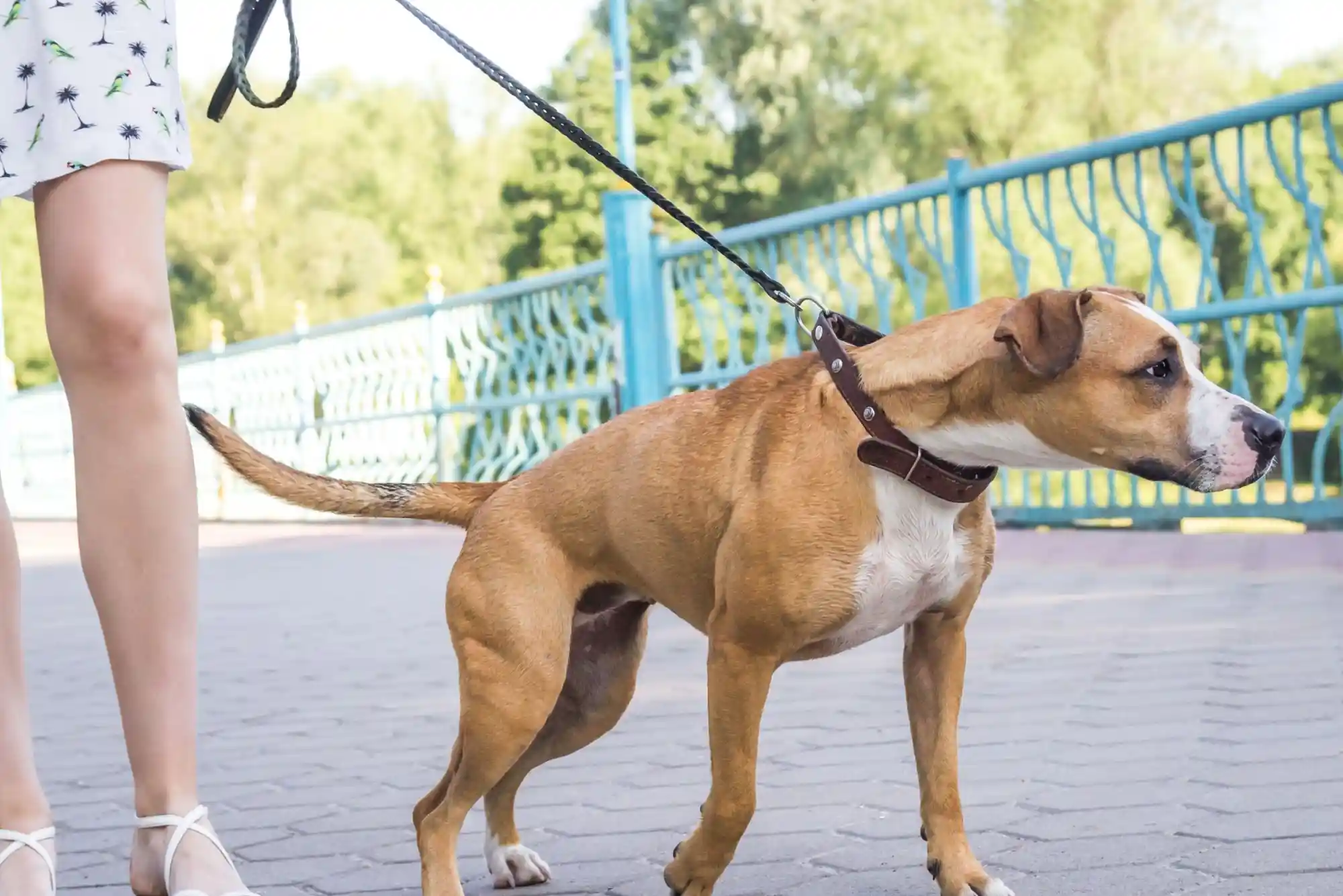
Taking your dog along while pushing a stroller sounds simple until your dog starts pulling toward smells, crossing in front of the wheels, barking at other dogs, or lunging at passing people. Learning how to train a dog to walk beside a stroller is therefore about more than teaching good leash manners. You are teaching your dog how to remain calm, pay attention to you, and move safely around a large, moving object.
A stroller changes the dynamics of an ordinary dog walk. Your hands may be occupied, your ability to change direction may be limited, and your dog has less room to make unpredictable movements. The safest approach is to build the skill gradually, beginning with loose-leash walking and introducing the stroller only when your dog is ready.
The American Kennel Club recommends reinforcing polite leash behaviour and avoiding situations in which pulling is rewarded with forward movement.
Why Training Your Dog to Walk Beside a Stroller Matters
A dog that walks calmly beside you is easier to manage than one that constantly reaches the end of the leash. With a stroller, the difference becomes even more important.
If your dog suddenly crosses in front of the stroller, you may have to stop abruptly. If your dog lunges toward another dog while you are pushing a stroller, you have fewer free hands with which to respond. Even an otherwise friendly dog can create a dangerous situation through excitement or poor leash habits.
The goal is not necessarily to make your dog walk in a rigid heel position. Instead, aim for a relaxed walking position in which your dog stays beside or slightly behind the stroller, maintains a loose leash, and responds when you change direction.

Loose-leash walking is a learned skill. Dogs do not automatically understand that they should match a human’s pace simply because a leash is attached.
Start With Basic Loose-Leash Training
Before attempting a full stroller walk, make sure your dog understands what you expect during ordinary walks.
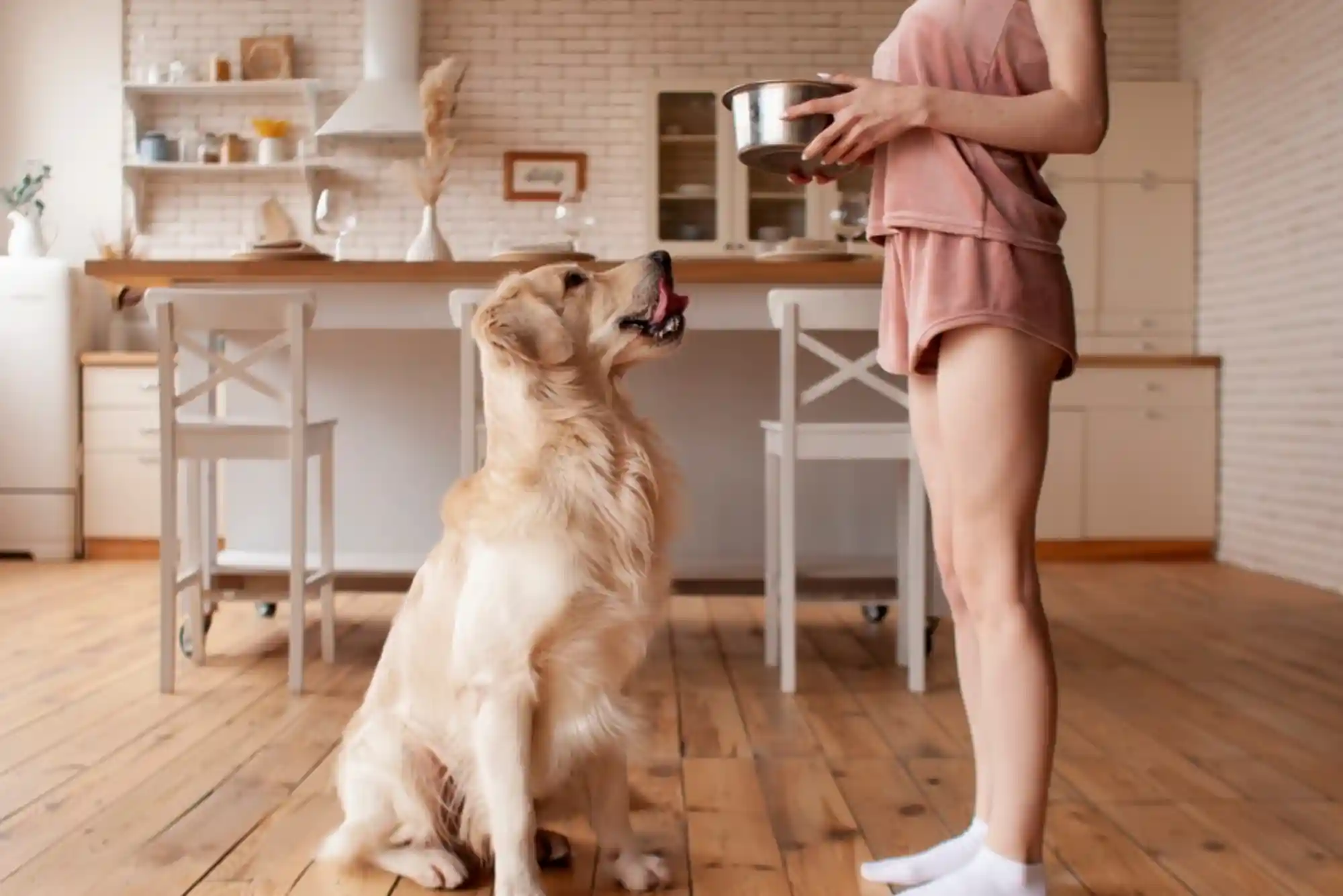
Choose a quiet area with few distractions. Walk forward and reward your dog whenever they remain near you without tightening the leash. Use small treats, praise, or another reward your dog genuinely values.
When the leash becomes tight, stop moving. Wait for your dog to create slack or return their attention toward you, then reward and continue.
This teaches a simple but powerful lesson: pulling does not make the walk continue, while calm walking does. The AKC recommends stopping when a dog pulls and waiting for a loose leash before moving forward.
Reward the Position You Want
Dogs learn through consequences. If your dog receives treats, praise, or forward movement while walking calmly beside you, that position becomes worthwhile.
Initially, reward frequently. As your dog’s skills improve, gradually reduce food rewards and use natural rewards such as sniffing a tree, exploring a safe area, or continuing the walk.
Introduce the Stroller While It Is Stationary
One of the biggest mistakes owners make when learning how to train a dog to walk beside a stroller is taking the stroller straight outside for a long walk.
Instead, make the stroller boring first.
Place the empty stroller somewhere familiar and allow your dog to investigate it at their own pace. Do not force your dog to approach it. When your dog looks at, sniffs, or walks near the stroller calmly, offer praise or a treat.
Once your dog is comfortable around the stationary stroller, move it a few inches. Reward calm behaviour again.
Gradually increase the movement until your dog can remain relaxed while you push the empty stroller around your home, garden, driveway, or another controlled area.
Make the Wheels Uninteresting
Some dogs become fascinated by moving wheels. They may try to chase them, sniff them constantly, or move directly across their path.
If your dog tries to chase the wheels, stop the stroller. Wait for calm behaviour and redirect your dog’s attention toward you.
Avoid turning wheel-chasing into a game. The objective is to teach your dog that moving wheels are simply part of the environment.
Practise With an Empty Stroller
Once your dog is comfortable around the stationary stroller, begin walking with it.
Choose a quiet location and keep the first sessions extremely short. Walk only a few metres if necessary. Reward your dog for remaining in the desired position and keeping the leash loose.
Do not worry about covering a particular distance. Five calm minutes are more useful than a 30-minute walk filled with pulling and frustration.
As your dog becomes more reliable, slowly increase the duration.
Teach Your Dog Which Side to Walk On
Consistency makes stroller walking easier.
Choose whether your dog will walk on the left or right side of the stroller and reinforce that position. You do not need military-style precision, but your dog should understand which area is safest.
If your dog moves directly across the front of the stroller, stop. Calmly encourage them back to the chosen side and reward them when they return.
Practise gentle turns in a quiet location. This teaches your dog to follow your movement rather than suddenly choosing their own direction.
Teach a Reliable “Let’s Go” Cue
A simple movement cue can be extremely useful during stroller walks.
Choose a phrase such as “let’s go” or “this way”. Begin indoors or in a quiet area. Say the cue, move forward, and reward your dog after a few steps of calm walking.
Repeat until your dog begins responding automatically to the phrase.
The AKC also recommends using a walking cue and building up the number of successful loose-leash steps gradually.
Once the cue works reliably, you can use it to move your dog away from distractions, change direction, or restart a walk after stopping.
Teach an Emergency Turn Before You Need It
When learning how to train a dog to walk beside a stroller, do not wait for a difficult situation before teaching your dog how to turn away.
Imagine that another dog appears unexpectedly around a corner. If your dog has already learned a cheerful “this way” cue, you can turn around before the situation escalates.
Practise this without distractions first. Say “this way”, turn smoothly, encourage your dog to follow, and reward them.
Then practise in different quiet locations. Gradually introduce mild distractions.
The aim is to create an automatic response that gives you another option besides pulling your dog away from a trigger.
How to Prevent Lunging During Stroller Walks
Lunging can be caused by excitement, frustration, fear, or a strong desire to reach another animal or moving object. It should not automatically be interpreted as aggression.
The most effective strategy is to notice the trigger before your dog becomes overwhelmed.
For example, if your dog notices another dog 30 metres away but is still able to respond to you, that is your opportunity to create more distance or redirect their attention. If you wait until your dog is barking, lunging, and ignoring every cue, learning becomes much harder.
Use Distance as a Training Tool
Distance is one of the most useful tools for managing reactive behaviour.
If your dog becomes tense around another dog, cross the street, change direction, move behind a parked vehicle, or choose a wider path.
Once your dog can look at the trigger without exploding, reward calm behaviour.
The AKC recommends teaching alternative behaviours such as “watch me,” “touch,” or “find it” while managing the dog’s distance from triggers.
Teach “Watch Me” or “Touch”
Practise these cues at home before using them during stroller walks.
For “watch me,” reward your dog for making eye contact with you. For “touch,” teach your dog to gently touch your open hand with their nose.
Start without distractions and gradually practise outdoors.
These behaviours give your dog something productive to do when an interesting distraction appears.
Do Not Punish Lunging
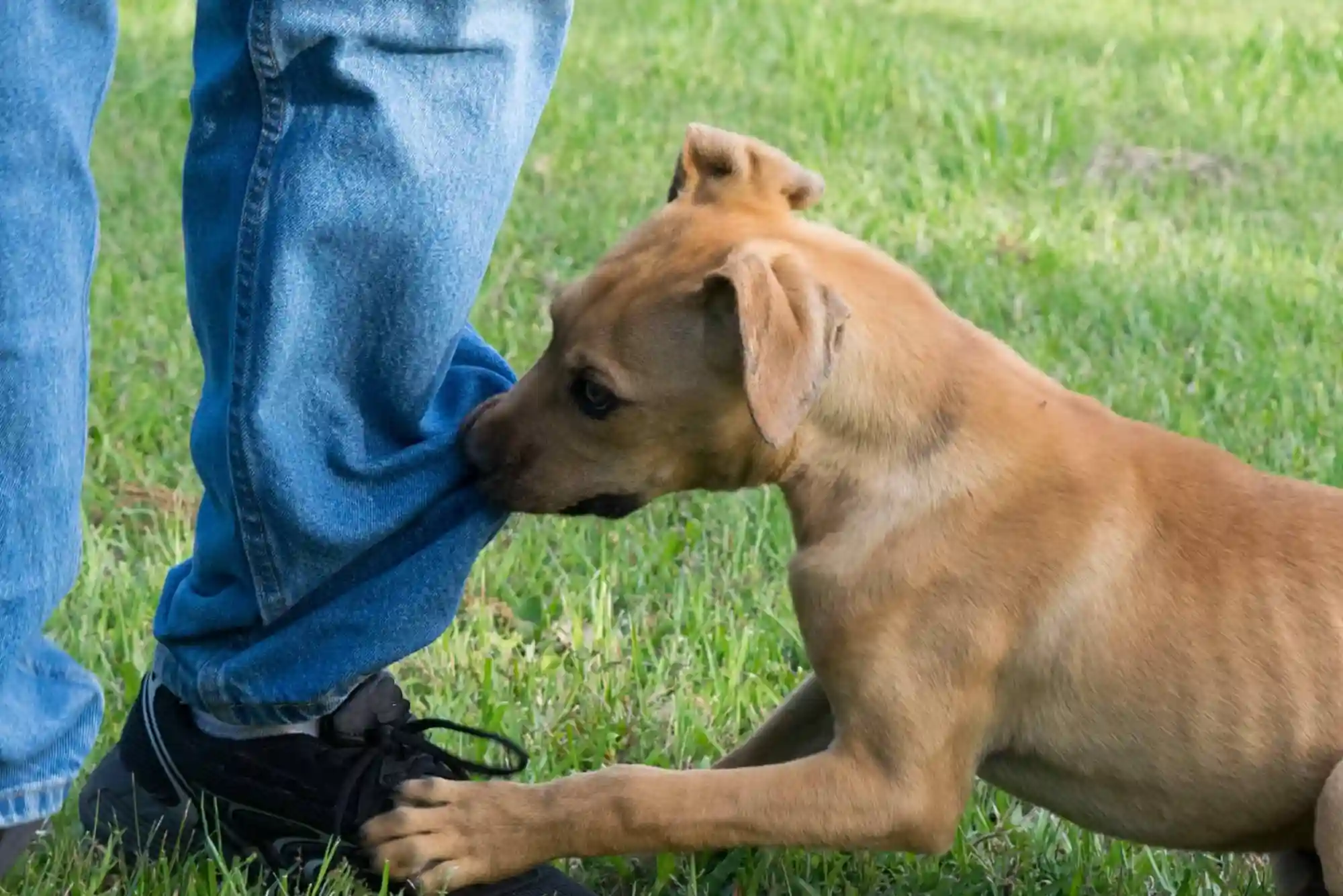
Yanking the leash or shouting may feel like an immediate solution, but punishment does not teach the dog what you want them to do instead. It may also increase stress when lunging is connected to fear or anxiety.
Instead, calmly create distance from the trigger and wait for your dog to regain composure.
If your dog repeatedly lunges at dogs, people, cyclists, or vehicles, work below the point at which your dog loses control. If that is difficult to achieve, a qualified positive-reinforcement trainer or veterinary behaviour professional can help.
Gradually Add Real-World Distractions
Once your dog can comfortably walk beside an empty stroller in a quiet environment, begin adding distractions one at a time.
You might start on a quiet pavement, then practise somewhere with a few pedestrians. Later, you can introduce bicycles, distant dogs, traffic sounds, and busier paths.
Do not increase every difficulty at once.
For example, taking a dog that has only practised indoors directly into a crowded park with a stroller, children, cyclists, and unfamiliar dogs is likely to produce unnecessary stress.
Instead, build success gradually.
This principle is consistent with general loose-leash training guidance: begin in a low-distraction environment and progressively increase distractions as the dog becomes reliable.
Choose Appropriate Walking Equipment
Equipment cannot replace training, but it can make training safer and easier.
Use a properly fitted collar or harness and a standard leash that gives you enough control. Avoid equipment that causes unnecessary pain or discomfort.
A retractable leash can be particularly inconvenient during early stroller training because it allows the dog to gain distance by pulling. The AKC notes that retractable leashes can reward pulling because the dog receives more freedom when they move against leash tension.
If you are already dealing with a powerful puller, discuss suitable equipment with a qualified trainer rather than simply choosing the most restrictive product available.
Keep Stroller Training Short and Predictable
Dogs generally learn better when training is manageable.
Start with short sessions and finish while your dog is still succeeding. If your dog becomes overtired or overstimulated, return to an easier environment.
A predictable routine can help. Give your dog an opportunity to sniff and relieve themselves before focused training, then begin with a few simple behaviours they already know.
You can also explore resources from Lightgraze for additional pet-related information, including Herbivore Small Pet Diets.
The important point is to keep stroller training separate from trying to exhaust your dog. A calm, focused dog is generally easier to teach than one who has been pushed beyond their ability to cope.
Common Mistakes to Avoid
When learning how to train a dog to walk beside a stroller, consistency matters more than perfection.
Allowing your dog to pull sometimes because you are in a hurry can make training confusing. If pulling occasionally results in reaching another dog, smell, or interesting location, the behaviour can remain rewarding.
Another common mistake is starting with a busy route. Give your dog the opportunity to master the basics before adding complicated distractions.
Avoid constantly repeating commands. If your dog does not respond, reduce the difficulty rather than saying the same cue over and over.
Finally, do not expect every walk to be perfect. Dogs can have good days and difficult days depending on their energy, environment, stress, and distractions.
When to Seek Professional Training Help
Some dogs require professional assistance, particularly when lunging is intense or unpredictable.
If your dog has attempted to bite, repeatedly snaps at people or dogs, cannot disengage from triggers, or is physically strong enough to pull you or the stroller into danger, seek help from a qualified force-free trainer or veterinary behaviour professional.
Safety should always come before completing a planned walk.
For additional general dog-walking resources, you can also consult the AKC Stroller Walking Guidelines and the AKC’s broader loose-leash training guidance.
Build Calm Stroller Walks One Step at a Time
Learning how to train a dog to walk beside a stroller is not about forcing your dog into a perfect position. It is about teaching a reliable set of behaviours: walk with a loose leash, stay on the safe side of the stroller, respond to your cues, and remain calm around distractions.
Start with ordinary leash training. Introduce the stationary stroller, then the moving stroller, followed by short outdoor sessions. Reward calm behaviour, stop when pulling occurs, and increase distractions gradually.
If lunging occurs, create distance rather than escalating the situation. With consistent practice, your dog can learn that walking calmly beside the stroller is simply another normal part of the daily routine.
Start with just five calm minutes today. Once those minutes become reliable, build from there—and your future stroller walks can become safer, smoother, and much more enjoyable for both you and your dog.
FAQs
How do I get my dog to stop pulling while walking?
Stop moving whenever the leash becomes tight. Wait for your dog to create slack or return their attention to you, reward that behaviour, and then continue walking. Over time, your dog learns that loose-leash walking is what makes forward movement happen.
How do I stop my dog from lunging at other dogs on walks?
Start by increasing the distance between your dog and the other dog. Redirect your dog’s attention before they become highly aroused and reward calm behaviour. If your dog cannot respond to you, you are probably too close to the trigger.
What age should you start leash training a puppy?
You can begin teaching basic leash skills when your puppy comes home. Start indoors or in a quiet, controlled environment and keep sessions positive and brief. Leash walking is a learned behaviour rather than something puppies automatically understand.
How do I teach my dog to walk politely on a leash?
Reward your dog for staying near you with a loose leash. When they pull, stop instead of allowing forward movement to reward the pulling. Gradually practise in environments with more distractions as your dog’s skills improve.
Should I let my dog sniff during a walk?
Yes. Sniffing provides mental stimulation and can be used as a natural reward for polite walking. For example, after your dog walks calmly for a short distance, you can release them to investigate an appropriate area. The AKC recommends using everyday activities such as sniffing as “life rewards” during leash training.
What should I do if my dog suddenly lunges while I am pushing a stroller?
Prioritise safety. Stop the stroller if possible, create distance from the trigger, and calmly redirect your dog once they are able to focus. If your dog regularly lunges with enough force to compromise your control of the stroller, seek professional behavioural guidance before continuing difficult walks.
Related Reading: Best Heavy Duty No-Pull Harnesses for Pitbulls, Boxers, and Strong Pullers — full guide
Related Reading: Feline Hyperthyroidism: Weight Loss with Increased Appetite Symptoms and Treatment — full guide
Related Reading: حجز الطيران: كل ما تحتاج لمعرفته
Related Reading: حجز الطيران: كل ما تحتاج لمعرفته — full guide
Related Reading: حجز الطيران: كل ما تحتاج لمعرفته — full guide
Related Reading: حجز الطيران: كل ما تحتاج لمعرفته — full guide
Related Reading: حجز الطيران: كل ما تحتاج لمعرفته — full guide
Related Reading: حجز الطيران: كل ما تحتاج لمعرفته — full guide

