







Introduction
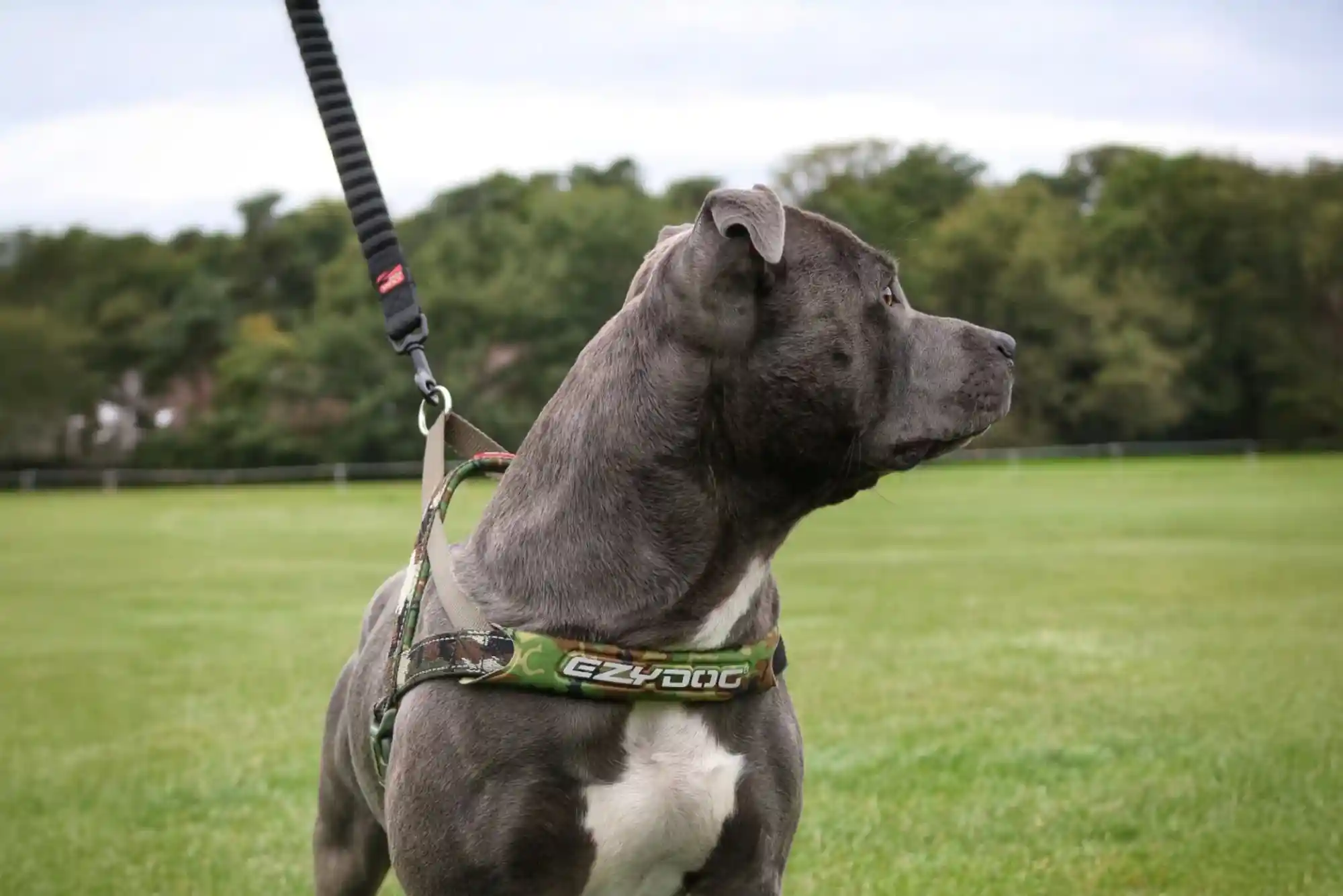
Walking a powerful dog can be enjoyable, but persistent pulling can quickly turn an ordinary stroll into a battle of strength. Pitbulls, Boxers, and other strong pullers can generate considerable force, making a flimsy harness uncomfortable, unreliable, or simply unsuitable for everyday use. The right heavy duty no-pull harnesses can give you better control while distributing pressure more comfortably across your dog’s body.
A good harness is not a magic solution to pulling. Instead, it should work alongside reward-based training and consistent handling. For owners dealing with enthusiastic dogs, choosing equipment with sturdy materials, secure adjustment points, and an effective attachment system can make training much easier.
This guide explains what to look for in heavy duty no-pull harnesses, how different designs work, and how to select the right option for a muscular dog without sacrificing comfort.
Why Strong Dogs Need Heavy Duty No-Pull Harnesses
Large, athletic dogs put more stress on walking equipment than small or lightly built dogs. A strong dog may suddenly chase a squirrel, react to another dog, or surge toward an interesting smell. A harness that works perfectly for a calm dog may not withstand repeated high-force pulling.
The advantage of heavy duty no-pull harnesses is their combination of strength and control. Quality models typically use reinforced webbing, durable stitching, robust buckles, and carefully positioned attachment points. These features are particularly valuable for Pitbulls and Boxers because their muscular bodies can make ordinary walking gear easier to stretch, shift, or damage.
However, durability should never come at the expense of fit. An extremely strong harness that rubs the armpits or restricts shoulder movement is not a good harness.

What Makes a No-Pull Harness Heavy Duty?
The term “heavy duty” can mean different things depending on the manufacturer. Rather than judging a harness by its appearance alone, examine how it is constructed.
Strong Webbing and Reinforced Stitching
The webbing forms the foundation of a harness. Look for dense, durable material designed to resist stretching and abrasion. Reinforced stitching around the leash attachment points is equally important because these areas receive the greatest amount of force.
Metal or high-quality reinforced hardware can also improve longevity, particularly for dogs that frequently pull.
Secure Buckles and Adjustment Points
A powerful dog can expose weaknesses in poorly designed buckles. The fastening system should close securely and remain stable during movement.
Adjustment points should allow you to create a snug fit without making the harness excessively tight. A harness that constantly slides sideways is difficult to control and may create uncomfortable rubbing.
Reliable Leash Attachment Points
Many no-pull harnesses feature a front leash attachment, while others provide both front and back attachment points.
A front attachment can help redirect a pulling dog toward you when the dog moves ahead. A back attachment may be useful for ordinary walking once the dog has learned better leash manners. Having both gives owners more flexibility during different stages of training.
How No-Pull Harnesses Help With Pulling
A no-pull harness does not automatically teach a dog to walk politely. Its main purpose is to provide a handling advantage while you teach the desired behavior.
When a dog pulls from a traditional collar or back attachment, the dog can often put its entire body weight behind the movement. A front-attachment harness can change the direction of that force. Instead of simply allowing the dog to drive straight ahead, it can encourage the dog’s body to turn back toward the handler.
This makes it easier to interrupt forward momentum without relying on painful corrections.
For particularly determined dogs, combine the harness with gradual leash training. Reward your dog whenever the leash remains loose, and reduce distractions when the environment becomes too exciting.
Owners looking for additional guidance can also explore Whole Dog Journal Pulling Prevention for further information about preventing pulling through training.
Choosing the Right Harness for Pitbulls
Pitbulls are often compact, muscular, and surprisingly powerful for their size. Their broad chest and strong shoulders make proper sizing especially important.
A harness should sit securely around the chest without cutting into the neck or restricting the front legs. Pay particular attention to the area behind the front legs. If the straps repeatedly rub there, even a durable harness can become uncomfortable.
For a Pitbull that pulls strongly, look for a design with reinforced attachment points and enough adjustment to accommodate the dog’s chest and ribcage. The harness should remain stable when the dog changes direction rather than twisting around the body.
Remember that chest circumference is often more useful than weight alone when selecting a size. Two dogs weighing the same amount can have dramatically different body shapes.
Choosing a Harness for Boxers
Boxers have athletic builds, deep chests, and energetic personalities. They can move quickly and suddenly, so a harness needs to remain secure during both relaxed walking and bursts of excitement.
For Boxers, avoid assuming that a tight harness is safer. A harness should be snug enough to prevent escape but loose enough to allow normal shoulder and leg movement.
A Y-shaped or similarly movement-conscious design can be useful when unrestricted front-leg movement is a priority. The exact design should depend on your dog’s individual anatomy and behavior.
Features to Look for in Heavy Duty No-Pull Harnesses
The best heavy duty no-pull harnesses balance strength, comfort, and practical control.
Reflective material can be helpful if you regularly walk in low-light conditions. Padded sections may improve comfort during longer walks, although excessive padding can sometimes trap heat.
A sturdy handle on the back can also provide a useful emergency-control point. It should not replace normal leash handling, but it can be helpful when you need to steady your dog temporarily.
Another consideration is adjustability. A harness with several adjustment points can provide a much more precise fit than a simple fixed-size design.
If your dog is still growing, check the fit regularly. Puppies and young adult dogs can change shape surprisingly quickly, meaning a previously well-fitted harness may eventually become restrictive.
How to Get the Correct Harness Fit
Correct fit matters just as much as construction. Even one of the strongest heavy duty no-pull harnesses can fail to perform properly if it is incorrectly fitted.
Start by measuring your dog’s chest according to the manufacturer’s instructions. Usually, this means measuring around the deepest part of the ribcage.
Once the harness is on, check that it sits flat against the body without digging into the skin. You should be able to place a couple of fingers between the straps and your dog’s body, depending on the manufacturer’s fitting recommendations.
Watch your dog walk, turn, sit, and lie down. The harness should stay in position without rubbing or restricting movement.
Also perform an escape check. Some dogs are remarkably good at backing out of poorly fitted harnesses. If your dog can reverse out of the harness, adjust it or choose another design.
Heavy Duty Does Not Mean Uncomfortable
It is tempting to assume that the strongest harness must also be the best. In reality, a poorly designed heavy harness can create its own problems.
Comfort affects behavior. If straps rub repeatedly, your dog may become reluctant to wear the harness or associate walking equipment with discomfort. A heavy, stiff design can also become unpleasant during hot weather or long walks.
Look for breathable construction and smooth edges around sensitive areas. The ideal harness should be strong enough for your dog’s pulling power while remaining comfortable enough for routine use.
This principle applies to all pet equipment. Even when researching unrelated animal nutrition topics, resources such as Herbivore Small Pet Diets show why equipment and care choices should be matched to the individual animal rather than selected solely by appearance.
Harness Training Should Start Slowly
Putting a new harness on a strong dog and immediately heading into a crowded park is rarely the best approach.
Let your dog investigate the harness indoors first. Reward calm behavior around it. Once your dog is comfortable, put it on for short periods and continue rewarding relaxed behavior.
Next, attach the leash indoors or in a quiet area. Practice a few steps at a time. Reward your dog for staying beside you and keeping the leash loose.
Gradually introduce distractions. If your dog begins pulling constantly, the environment may simply be too difficult at that stage. Move farther away from the distraction and reward calmer behavior.
The goal is to teach your dog that walking beside you is worthwhile, rather than expecting the harness itself to solve the problem.
Common Mistakes When Using a No-Pull Harness
One of the biggest mistakes is treating a no-pull harness as a substitute for training. Even the best heavy duty no-pull harnesses cannot teach loose-leash walking without consistent reinforcement.
Another mistake is choosing a harness based solely on the dog’s weight. Body proportions matter, particularly for muscular breeds with broad chests.
Some owners also leave the harness on for unnecessarily long periods. Unless the product is specifically designed for extended wear, remove it when appropriate and inspect your dog’s skin regularly.
Finally, avoid using excessive leash tension. The purpose of a no-pull design is to improve handling and encourage better walking, not to create constant pressure.
When a No-Pull Harness May Not Be Enough
Some dogs pull because they are excited, frustrated, fearful, or highly interested in their surroundings. Equipment can improve management, but the underlying behavior may require a structured training plan.
If your dog lunges aggressively, repeatedly escapes equipment, or is difficult to control physically, consider working with a qualified, reward-based dog trainer. A professional can assess the behavior and help you develop a safer walking strategy.
For severe pulling, prioritize safety. Choose walking routes with fewer triggers while your dog develops better skills.
Final Thoughts on Heavy Duty No-Pull Harnesses
The best heavy duty no-pull harnesses are not simply the thickest or most rugged-looking options. They are products that combine dependable construction with a secure, comfortable fit and useful leash-control features.
For Pitbulls, Boxers, and other strong pullers, pay close attention to chest measurements, adjustment points, attachment hardware, movement, and escape resistance. Then pair the harness with patient, reward-based loose-leash training.
A strong harness gives you better management. Good training teaches your dog what to do with that freedom.
If you want to explore more pet-care resources, visit Lightgraze for additional animal-care information and practical guidance.
FAQs
What is the best harness for a dog that pulls hard?
The best harness for a hard-pulling dog is one that fits securely, has durable construction, and provides a suitable leash attachment point for your training approach. A front-clip or dual-clip design can provide useful control, but fit and training remain essential.
Are no-pull harnesses good for Pitbulls?
Yes. A properly fitted no-pull harness can be useful for Pitbulls because it can provide better handling while distributing leash forces across the body. Choose a durable design that accommodates the dog’s broad chest and does not restrict shoulder movement.
What harness is best for a Boxer that pulls?
A Boxer generally benefits from a secure, adjustable harness that accommodates its deep chest and athletic movement. Look for durable materials, reliable buckles, and an attachment system appropriate for loose-leash training.
Do no-pull harnesses really stop dogs from pulling?
Not by themselves. No-pull harnesses can make pulling easier to manage, but they do not replace training. Rewarding loose-leash behavior and gradually increasing distractions are important parts of teaching a dog to walk politely.
Is a front-clip or back-clip harness better for pulling?
A front clip can provide additional steering and may make it easier to redirect a dog that pulls forward. A back clip can be convenient for dogs that already have reasonable leash manners. Some harnesses offer both options.
How tight should a heavy-duty dog harness be?
A harness should be secure without being restrictive. It should not slide excessively or allow your dog to escape, but it should also avoid digging into the skin or interfering with normal movement. Always follow the manufacturer’s fitting instructions.
Can a strong dog break a harness?
Yes. Any harness can eventually fail if it is poorly constructed, damaged, incorrectly fitted, or exposed to forces beyond its intended use. Inspect stitching, buckles, straps, and attachment points regularly, particularly if your dog is a powerful puller.
Should a dog wear a no-pull harness all day?
Generally, a walking harness is intended for use during walks and controlled activities rather than continuous wear. Follow the manufacturer’s instructions and remove it when appropriate so you can inspect your dog’s skin and coat for irritation.
Related Reading: Feline Hyperthyroidism: Weight Loss with Increased Appetite Symptoms and Treatment — full guide

